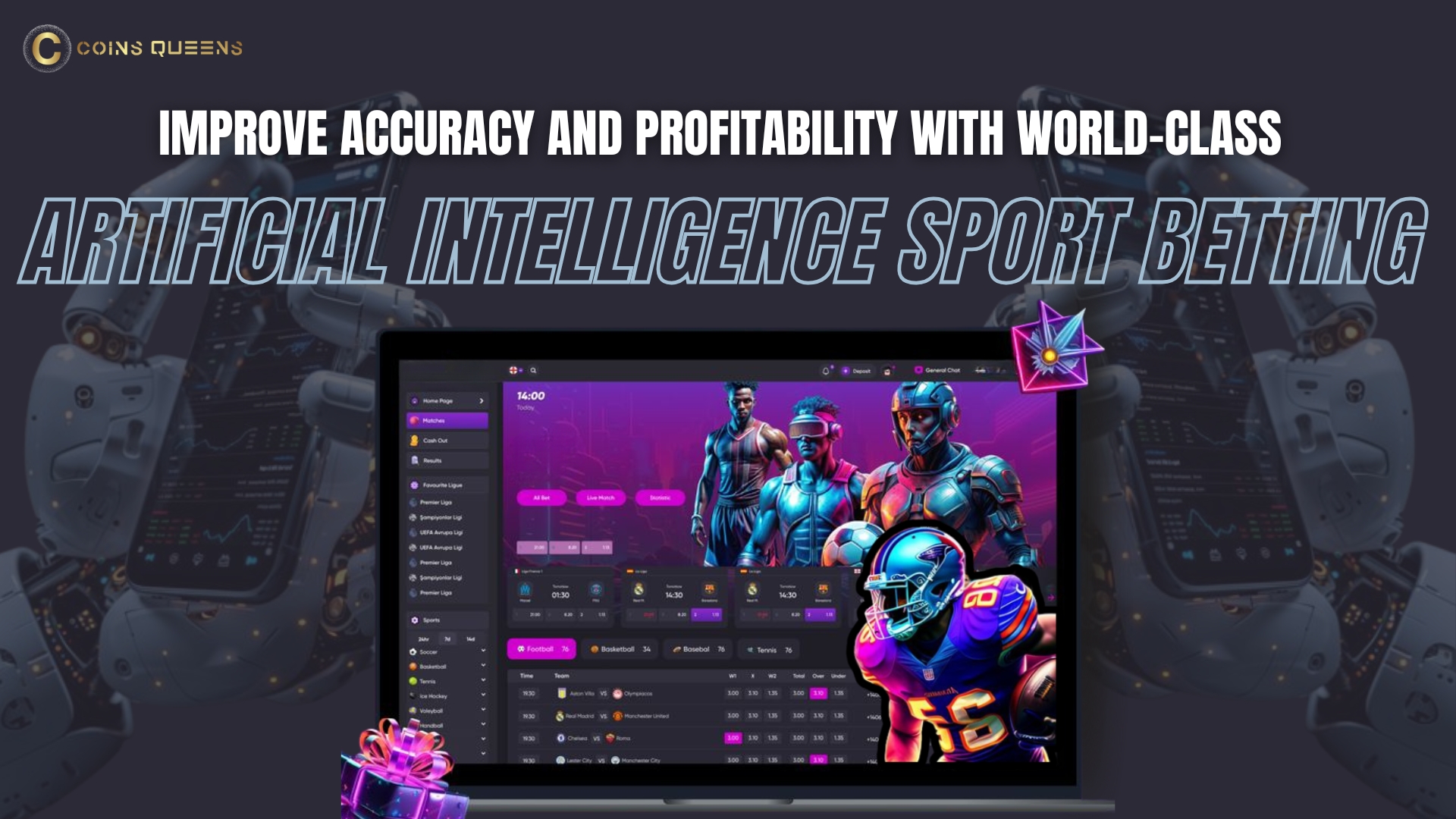
Artificial intelligence in sport betting began during the early 2000s when data models started predicting match results using past game statistics and player records. Betting businesses saw quick returns from faster decision-making and higher bet accuracy. The reports indicated that the AI betting market in the world stood at 1.6 billion USD in 2022 and could surpass 5.3 billion USD by 2030. This blog elaborates on Artificial intelligence in sports betting.
Why Prefer Artificial Intelligence In Sports Betting?
Artificial intelligence in sport betting uses data and suggests ways to improve the Betting businesses to grow faster. Business people often create such AI sports betting platforms to follow patterns and odds from many matches. These platforms sometimes watch player statistics or team forms over long periods. Many online sports betting operators try to improve results by applying machine-based learning methods. Artificial intelligence remains useful for futuristic sports betting activities.
AI Innovations For Smart Sports Betting:
AI-Powered Predictive Analytics
Artificial intelligence processes historical data with player details and team performance across various matches. These AI models combine external match conditions to produce more accurate estimations regarding outcomes.
Real-Time Odds Adjustments
The AI modifies betting odds as soon as in-game events occur without waiting for manual inputs. Sudden changes in player movement or score are quickly reflected in the betting platform.
Fraud Detection and Responsible Gambling
AI monitors strange activity and money transfers in gambling accounts. It detects activities such as match manipulation or hidden financial trails under fixed rules.
AI-Powered Mobile Betting
The mobile apps powered by AI deliver individualised suggestions by reading previous betting history. Real-time feedback keeps users engaged with their apps during betting moments.
Sentiment Analysis for Betting
AI models collect sentences from digital news and open social platforms that discuss teams or players. These signals are matched with betting movements to decide how odds must shift before events.
AI in Esports Betting
AI reads game replays or live performances and identifies repeated gaming styles among players. Based on that knowledge, the betting platform recalculates esports odds more accurately.
Blockchain and AI Integration
Blockchain provides records that cannot be changed, and AI audits those records to remove errors or suspicious results. Smart contracts handle reward releases based on predefined sporting results.
Adaptive AI Betting Strategies
Market shifts create uncertain outcomes, and AI models retrain themselves based on current performance levels. These changes let betting predictions adjust themselves across repeated match cycles.
AI plus AR and VR in Betting
Users interact with simulated sports fields and players through headsets backed by AR or VR. AI integrates real-time odds into this space, allowing continuous betting through digital environments.
Data Used By AI In Sport Betting:
Match history
Old matches give numerical records of previous team and player results over many months and years. Artificial intelligence finds repeated patterns from these results to estimate future outcomes with stable accuracy.
Player performance
Personal statistics for each player across different competitions become input for decision-making programs. Long-term consistency and short-term form influence model predictions under fixed parameters.
Team strength
Comparisons between team abilities rely on scorelines, possession, pass completion, and goal attempts. Historical team power, combined with seasonal changes, affects output from artificial intelligence logic.
Injuries
Unavailable players from medical reports influence expected team structure and tactical plans. This reduces match expectation when key players miss games for longer periods.
Weather conditions
Atmospheric changes like wind and humidity affect players’ ability. AI adds these elements into formulas before simulating outcomes for scheduled fixtures.
Home or away matches
Location of the match gives a statistical advantage to the hosting team due to support and routine. AI adjusts probability when travel distance and crowd influence become heavy factors.
Betting odds history
Learning patterns are provided through previous bookmaker odds, and actual results. AI uses this data to track common mistakes and gain predictive direction through past behavior.
Types Of AI Models Used In Sport Betting:
Machine learning models
These AI models identify patterns in sports data without fixed instructions and improve with repetition. Machine learning models give basic win-loss forecasts using standard inputs like scores and rankings.
Neural networks
Structured like a human brain with layers, these AI programs solve complex relations in sports statistics. Different features connect through weights and biases for more advanced output than traditional rules.
Deep learning models
Multiple neural layers work together on large volumes of sports data to improve match prediction. Each layer filters separate information until the final output provides winning or scoring chances.
Natural Language Processing
Sports reports, interviews, etc, in text form help with real-time updates. This model transforms human words into data that AI can use to detect risk and opportunity.
Reinforcement learning
This method trains models to improve predictions by rewarding correct outcomes from previous attempts. Continuous feedback loop lets the AI improve prediction logic over long-term sport event sequences.
Decision trees
Tree-like models divide sport data by key factors like form, injury, or past results in steps. Each path leads to an outcome and helps create possible match scenarios based on known inputs.
Benefits Of An AI-Driven Sports Betting Platform
Create Virtual Environments
Artificial intelligence produces simulated betting spaces where users can place bets in a digital world that feels close to physical surroundings. The AI-inspired sports betting involves the reproduction of the game environment by the element of superior graphics and statistics-informed game simulations.
Analyze Historical Data
AI technology collects large amounts of past sports statistics that give input for deeper betting predictions based on repeated outcomes. It connects event timelines with player actions to guess results with improved accuracy.
Recalculate Odds
AI modifies betting odds by calculating shifts in player momentum or changes during matches that happen in real-time. Numbers keep changing based on the current situation inside the game process.
Detect Suspicious Activity
These platforms track sudden movements in betting patterns or irregular bets placed by specific accounts that may indicate unfair practices. AI identifies signals showing any possible cheating behaviour or money misuse.
Personalized Recommendations
AI sends specific betting tips for each user depending on their earlier actions and interest in certain teams or sports categories. Profile data helps provide suggestions that match user history.
Analyze Player Behavior
Machine learning observes athlete movements and playing habits to shape more realistic betting odds. AI processes speed, strength, and style patterns over several games and builds accurate assumptions.
Ensure Transparency
Smart contracts hold every bet and transaction in records where no changes can be made without agreement and clear proof. This process stays fixed and readable by both users and platforms.
Maximize Profit
AI changes betting models based on profit tracking and adjusts ratios to help platform owners gain better returns over time. Investment risk is reduced by linking each prediction with winning possibility percentages.
Real-Time Examples Of Artificial Intelligence Sport Betting
BetBuddy
This platform uses machine learning to identify risky behaviour in betting accounts and provides alerts. It works with betting companies to reduce problem gambling using prediction and pattern observation.
Swish Analytics
It offers AI-based predictions for American sports using statistics and simulation. This platform also provides score prediction, win probability, and betting suggestions from continuous data input.
IBM Watson with Fantasy Football
This platform uses NLP and structured data to provide weekly performance insights to fantasy users. It explains the reasoning through text while relying on current form and past game results.
TheStatsZone
It provides detailed AI-powered statistics and predictions for multiple sports, including football and cricket. This platform collects inputs like goals, assists, fouls, and other metrics for clearer forecasting.
ZCode System
A betting platform that uses neural networks to generate tips for various sports games. It processes odds, weather trends, team rankings, and other elements through complex AI layers.
Conclusion
Accuracy is also significant as betting activities keep rising daily. A strong sports betting platform supports regular income, where artificial intelligence manages risk and prediction with steady results. Businesses take a profitable direction when high-end AI-backed betting delivers constant updates and large datasets forecasting across sports sectors. Entrepreneurs now turn their attention towards advanced AI sports betting platforms that carry strong calculation support. Coinsqueens is a leading AI development company that provides solid AI-driven solutions for better betting performance. Our experts build AI sports betting platforms that raise income for long-term growth and reduce risks. Start your sports betting business with smart AI technology today.